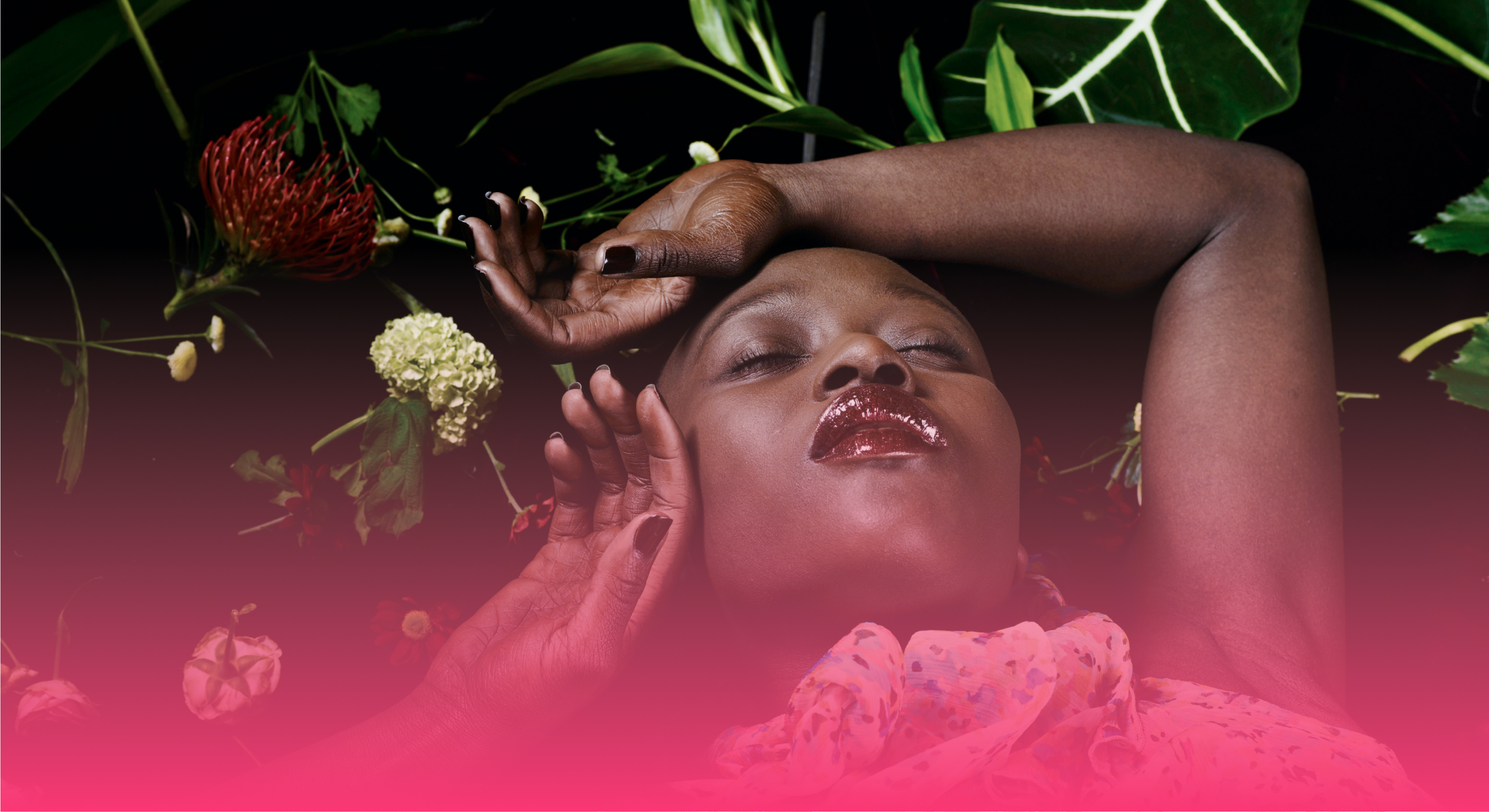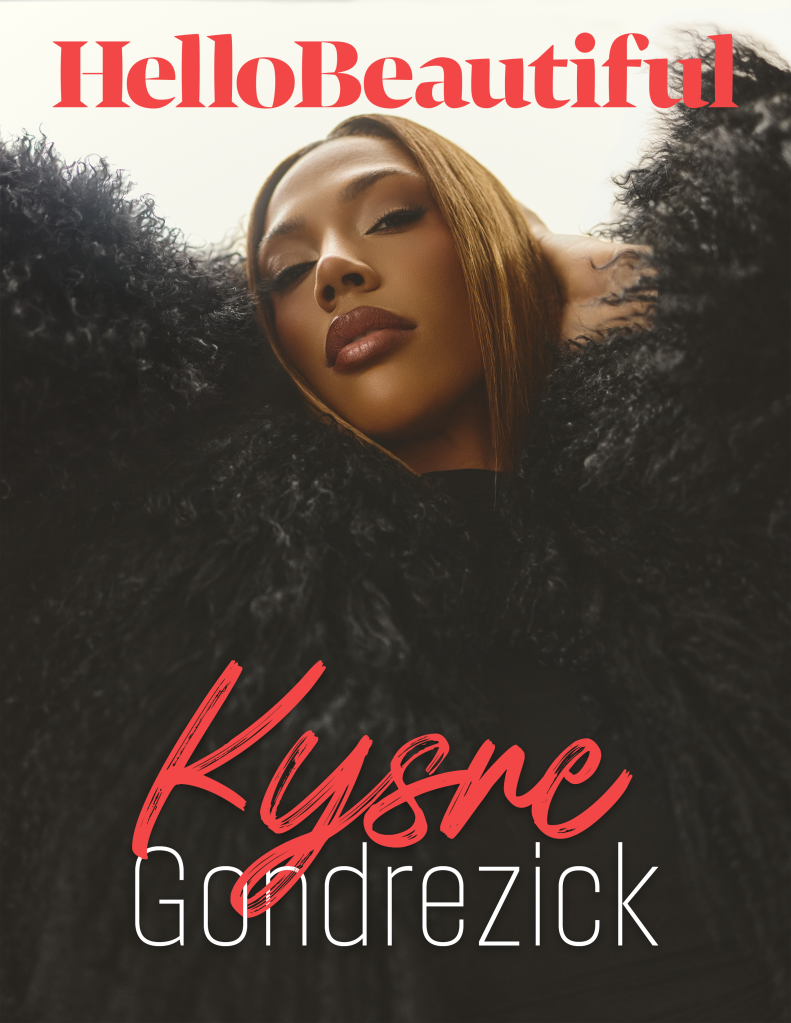
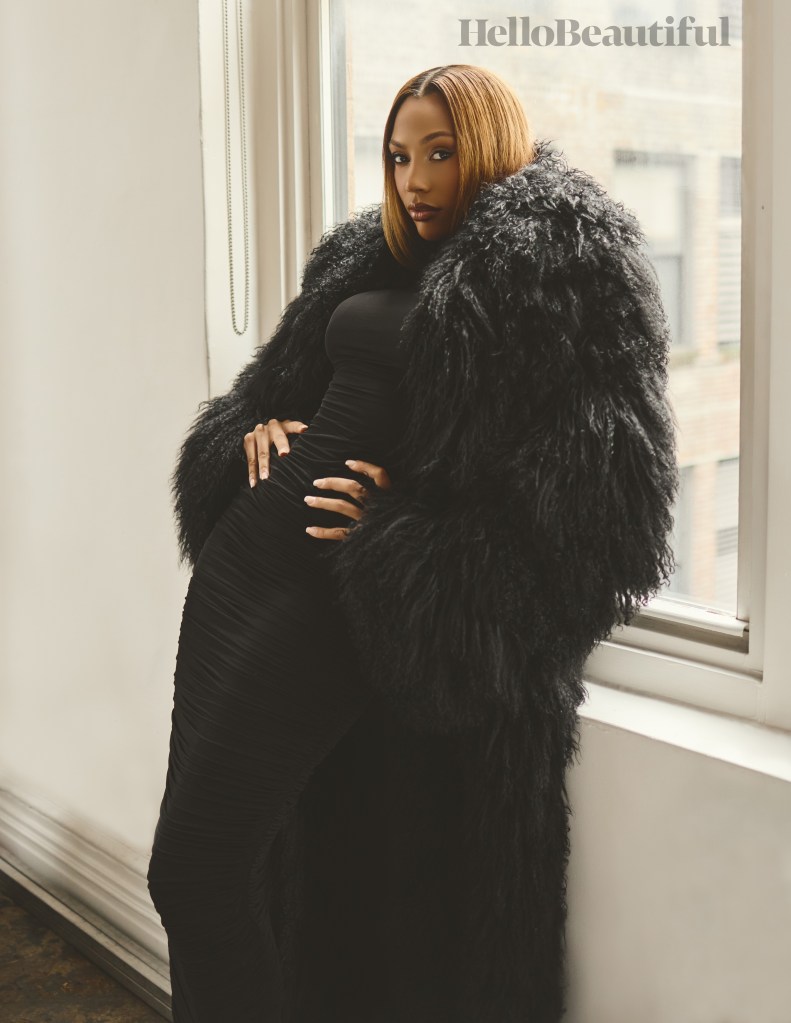
“I’m the little girl that wears cornrows, headbands, wristbands, and plays basketball,” Kysre Gondrezick says. Seen now over Zoom, she is a striking contrast to that memory: fully glam, lips precisely lined with gloss, evoking the soft-focus polish of a ’90s sitcom beauty. She sits in front of a well-lit vanity with a fresh blowout framing her face, as she still carries the sheen of a recent cover shoot. Even she acknowledges the evolution with wry humor. “You know, she has no business being on a Playboy magazine,” she says, laughing.
The chasm between her present exterior and the layered interior she reveals — complex, filled with profundity, and deeply human — feels worlds apart. It’s something I admit to her at the start of our conversation, “After researching your story, it’s clear [you] [contain] far more depth than many might assume.” The moment I say it, her face breaks into a smile, a laugh follows closely behind, and a new openness settles into the conversation that hadn’t been there before.
MUST READ: Letter From The Editor: Kysre Gondrezick Brings Her A-Game To Her HB Cover Shoot
Those recollections of the cornrows and headbands mark the earliest chapters of her story—the honest and humbling beginnings that define the space between girlhood and womanhood. Raised in Benton Harbor, Michigan, the Gondrezick name carried weight long before she entered the public eye, emblematic of a basketball family dynasty. Her late father, Grant Gondrezick, was an NBA athlete who played for the Phoenix Suns, and her mother, Lisa Harvey-Gondrezick, won a national women’s college basketball championship at Louisiana Tech under LSU’s Kim Mulkey. In many ways, her pursuit of basketball was inherited. With siblings, uncles, and grandparents completing the family’s basketball empire, she knew her pursuit towards basketball “was not a choice,” she says bluntly.
Hoop Dreams
Her parents were deeply involved in her basketball career, to the point of being overwhelmingly so. “My mom was my high school basketball coach for the four years I attended Benton Harbor. They took me to endless AAU games, traveling on the road, visits, and unofficial college visits,” she recalls. She continues, “I was very grateful to have the participation of both of them and for them being so hands-on with what they wanted their kids to accomplish and how they hoped we would follow in their footsteps.”
And that she did. During her senior year of high school, she set a Michigan state record, scoring 72 points in a single game in 2016, a moment that cemented her as a force, and a five-star athlete before she ever entered college, and one that signaled the beginning of a transformative period in her life.
In 2021, just a few months before her draft, her father, Grant Gondrezick, passed away. It was the most pivotal moment of her career, yet the most devastating of her life. Through the draft process, she said nothing publicly, choosing instead to grieve in silence while preparing for the pro-career she’d worked toward her entire life. “The thing that I don’t really talk about is that when I received that news my senior year, I played the rest of the season feeling very numb,” she says. Her coaches allowed her space, letting her miss practices and simply show up for games. “I wasn’t living right,” she says.
Gondrezick admits that without her father, she might have walked away from basketball entirely. “From a business standpoint, the W is not going to care that I lost my father, they want to see what I can produce.”
So she made herself a promise: if her name wasn’t called on draft night, she would accept it as the end. “Let’s just say my name got called pretty early that day.”
“I was incredibly grateful,” she says. “That’s when I truly realized there was a higher power in control of my journey.” Drafted fourth overall to the Indiana Fever, virtually, from home during the COVID year, she remembers feeling a sense of completion. “I felt like I had proven everything my dad wanted me to do before my senior year. So when the season ended, I knew my time there had run its course, and I had to trust being drafted.”
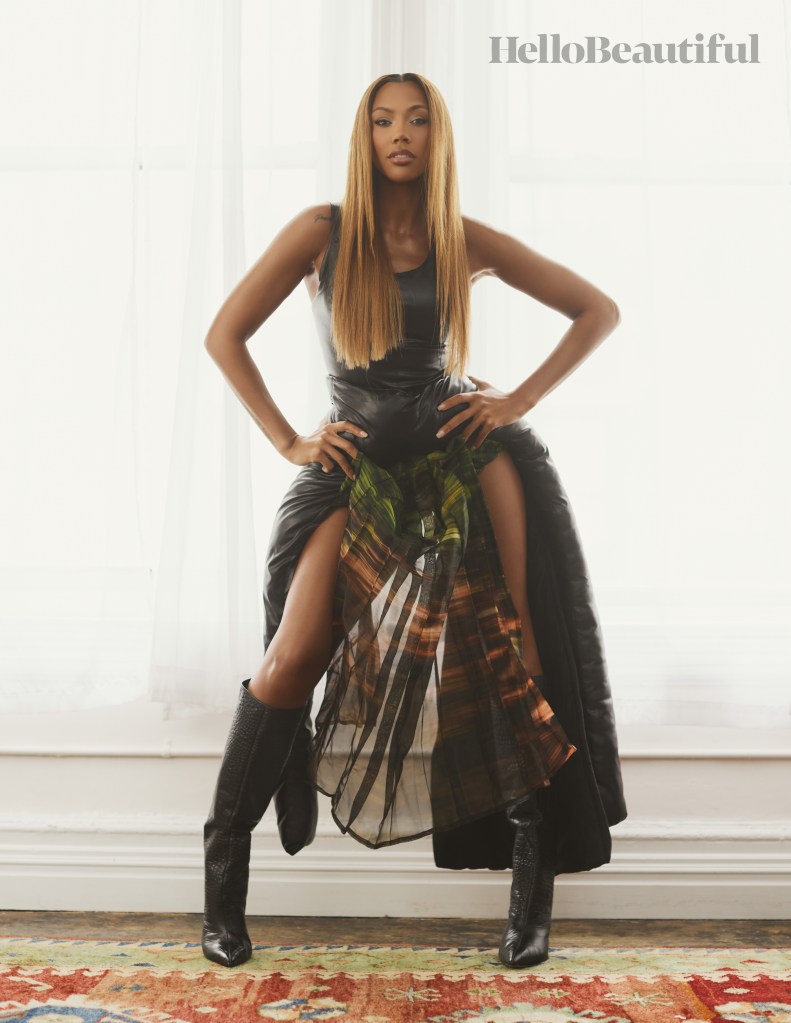
Resilence Is Her Superpower
Gondrezick’s persistence defines her. She has an almost insatiable hunger to transform life-altering setbacks, whether personal tragedies, like the loss of loved ones, or professional challenges, such as being traded from the Indiana Fever to the Chicago Sky only to be waived shortly thereafter, as a catalyst for growth and betterment. Some of her earliest on-screen recognition came from a 2015 news segment that documented her resilience. Titled “Gondrezick Sisters Motivated by Life-Altering Car Accident,” the feature explored the aftermath of a devastating 2011 car accident, detailing how she and her sister turned a traumatic experience into a motivational force for their futures. A superpower, she has, as some might put it.
“I know that I’m operating in something bigger than me. My purpose is much more expensive than the cost of me trying to control a surface-level lifestyle for myself or for someone else.” That sense of purpose is what gets her up and going every day. “It’s bigger than the game. It’s bigger than the pictures. It’s bigger than the beauty.” It’s hard for it not to sound cheesy, but for her, it’s true. She explains that she has felt this way since she was a little girl, and it was her resistance that set her apart from others from an early age. “It’s the testimonies you get to tell along your journey. It’s the level of positioning that God has placed me in to continue to tell my stories. That’s me operating in my purpose.”
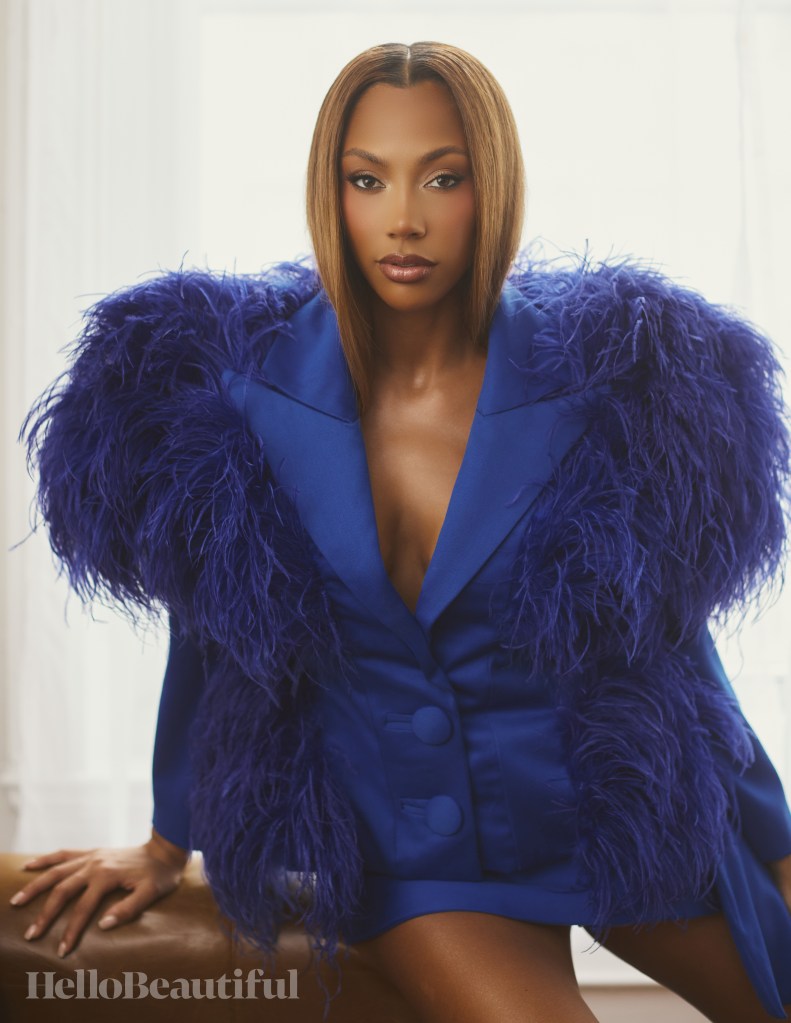
From star to role player, the transition from high school five-star athlete to WNBA professional is often a significant departure from what you’re used to, and for Kysre Gondrezick, that gap was deeply felt. The local standout who once set record-high point totals suddenly found herself on the bench, averaging barely five points. And while there were more eyes on her than ever before, the scrutiny often felt microscopic.
The WNBA, despite its prominence, is a league consistently subjected to disrespect, entrenched misogynistic stereotypes, and a glaring pay gap that has recently drawn public attention. “At that level, making that transition on the women’s side has been a lot harder than it is on the men’s side, because we go straight into it,” Gondrezick explains. Unlike the NBA, the WNBA does not have a summer league or G League—a structured pathway to help players acclimate to the pace, physicality, and style of professional play. Beyond these structural challenges, female athletes, particularly Black women like Gondrezick, are often sexualized in ways their male counterparts are not, adding yet another layer of complexity to navigating a professional career.
Operating In Her Femininity
There’s a viral clip of rapper Lil Yachty on a podcast, laughing at Gondrezick’s stats—at the time, she was averaging just 1.7 PPG for the season—and joking, “But she’s averaging 100 points off the court.” This kind of mockery, the vitriol seen in the clip, is emblematic of a broader issue many female athletes face: the dismissal of their athleticism and the disproportionate focus on their appearance.

“Women get sexualized all the time, whether it’s in the workplace, on social media, or just walking down the street. God created us to be beautiful, and with that comes power,” Gondrezick says. “And when you’re talented beyond your beauty, when you have depth, that can be intimidating.” She continues, “ Right now, I think we’re in a time where women are coming across as intimidating to some male counterparts because we’re finally being provided similar resources, opportunities, and in some cases, even more notoriety when it comes to our brands.”
Yet Gondrezick carries both criticism and praise lightly. “The validation I need doesn’t come from anyone else. I’m glad they’re paying attention, and hopefully I can give them something meaningful to pay attention to outside of that. But if that’s always what ignites the conversation, I don’t see anything wrong with it. At the end of the day, I’m just a girl.”
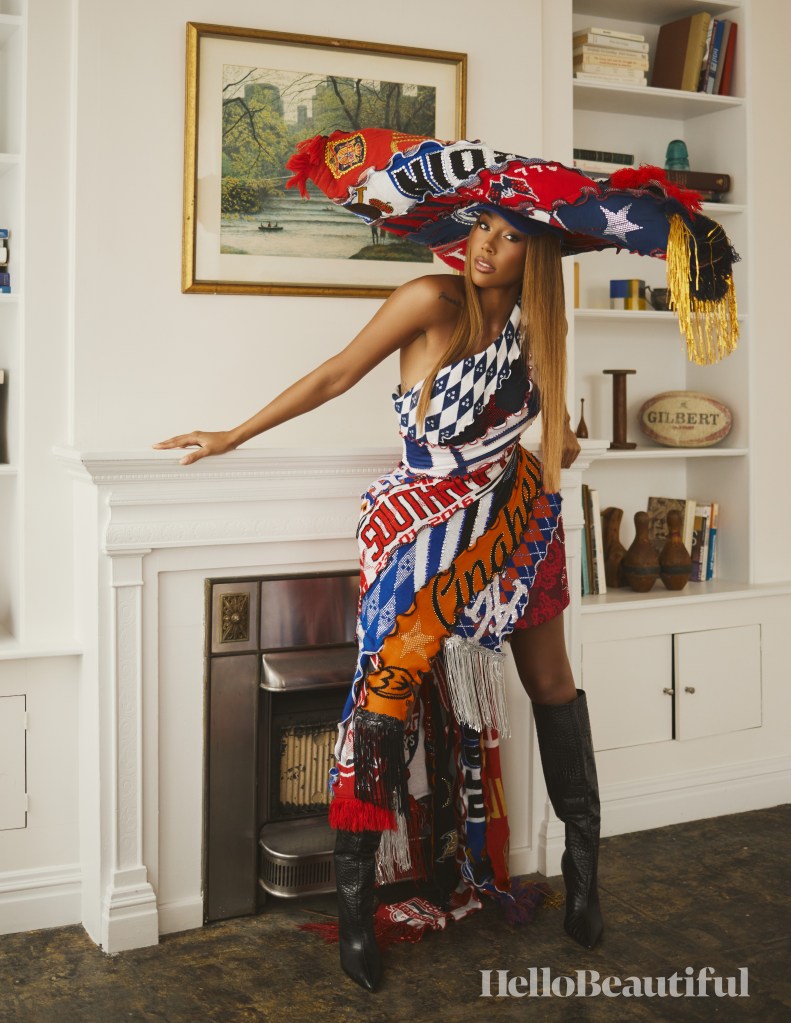
And a girl she simply is, because when she was waived by the Chicago Sky in 2024, she saw it as an opportunity to explore modeling. “I never thought about doing modeling or fashion until I did the tunnel walks, and everyone kept telling me I was walking into the wrong job, ‘She should be modeling, she should be on runways, she should be in magazines. She shouldn’t be walking to a basketball game,’” she remembers.
This idea of the female athlete as the everyday superstar—much like the NBA stars of the early aughts—has become increasingly visible in women’s sports, particularly with the rise of NIL deals. As Gondrezick leans further into this new realm, the conversation has shifted toward multiplicity: the ability to exist as both model and athlete. Still, the criticism finds its way in. “Now she doesn’t care about basketball. You can never win with the narrative.”
It’s a familiar reframing happening around women athletes everywhere: Paige Bueckers starring in car commercials, Angel Reese walking the Victoria’s Secret runway, Breanna Stewart attending the Met Gala. There is a lane opening specifically for WNBA players within fashion, especially through the now-sponsored tunnel. Gondrezick has embraced it fully. “The more comfortable I’ve become with myself, the better I’ve been able to give myself permission to just do it all,” she says.
For Love Of The Game
At 28 years old, at the time of this interview, she is clear about where she stands. “I’m young, I don’t have any kids, I’m healthy, I’m a God-fearing woman, and I enjoy doing all these things. These are things I’m passionate about.” Still, she wants it understood: basketball remains the priority. “Modeling doesn’t define me. But at the same time, while I’m still pursuing my dreams, God is still building and carving me out for longevity. How grateful and blessed is that?”

She pauses, as if to settle the matter once more. “That’s how I view my journey, even if others don’t see it that way.”
One of those dreams, unexpectedly, was gracing the cover of Playboy Magazine, a vision she has, somewhat surprisingly, carried since childhood. As the first WNBA player, and arguably the first prominent women’s athlete, to do so, she appears nude across the spread, submerged in a pool, her body washed in the golden gleam of reflected sunlight. The reactions, predictably, have been mixed, a response she anticipated even as she pursued it with intention. “When I first saw Playboy magazine as a little girl—I probably shouldn’t have—I came across one and saw a woman on the cover, and I was just enamored with her. I always wondered, would I be beautiful like that?” she recalls. “Twenty years later, I look up, and that woman is now me.”
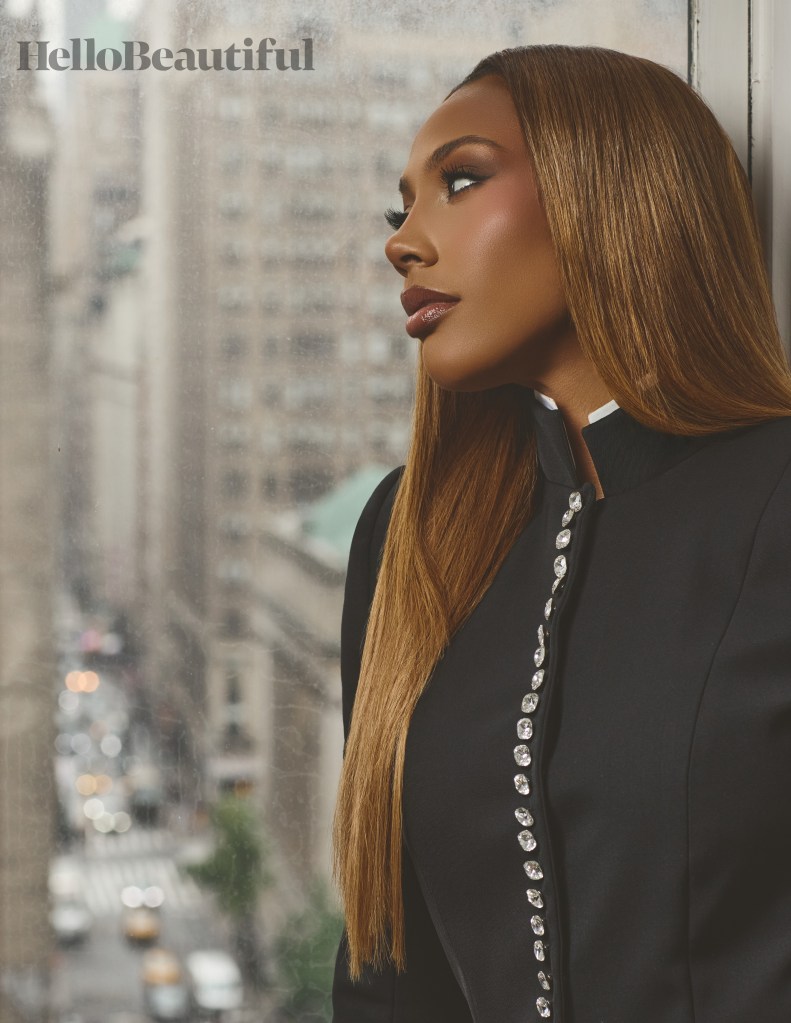
Arriving at that “yes,” however, was anything but simple. She asked her mother. She sat with herself. She had long, difficult conversations with her management. She even weighed what it might mean for her WNBA standing and eligibility. The inner debate ran so deep that on the morning of the shoot, she says, she experienced what felt like an anxiety attack, and even on publication day, she questioned whether she should pull it altogether.
“It was about breaking free from that level of control, people voicing their opinions about who they think I am based on what they see. I knew that if I could push through that, I’d be able to endure anything,” she says. In the end, there was one element that grounded her resolve. “Well, I like to do historical things,” she says.
Fresh from the glare of a Playboy cover, a moment when the world’s eyes were fixed on her, Gondrezick finds that her sense of beauty is not dictated by the applause. It is, in her words, “the ability to consistently invest in myself,” that is the only thing that makes her feel beautiful at the moment.
Kysre Gondrezick embodies a rare duality: a public figure whose life is constantly in the spotlight, and yet a young woman navigating her own private journey of growth, faith, and self-discovery. As she mentioned, she is “just a girl,” but within that simplicity lies a complex, layered identity. She reminds us that “just because you are a witness to my journey doesn’t make you the author,” a declaration of autonomy that speaks not only to the life of an athlete but to anyone striving to be self-defining.
Looking forward, her aspirations are as ambitious as they are personal: returning to the WNBA in the 2026–2027 season, launching a business, though she keeps the details close to the vest, deepening her faith, and ultimately meeting the person she is still becoming. Yet, even beyond the court and the public accolades, it is in the quiet moments of solitude that she finds true joy in a deliberate pause to reflect. She names this chapter of her life “Releasing to Receive,” one that she chooses not to explain further, not out of secrecy but with the pure frame of unknowingness and curiosity.
IN THIS ISSUE

When women athletes land on the covers of Vogue, Time, Essence, and other major publications, it’s never just about the photo. It’s about power, presence, and visibility. For Black women athletes, especially, these covers mark a long-overdue recognition of excellence that extends far beyond the field, court, or track. From pioneers who shattered barriers to modern stars shaping […]


Kysre Gondrezick just made history and headlines as Playboy’s Miss June 2025. Check out a gallery of her hottest photos inside.